
- admin
- September 6, 2026
- 11:47 am
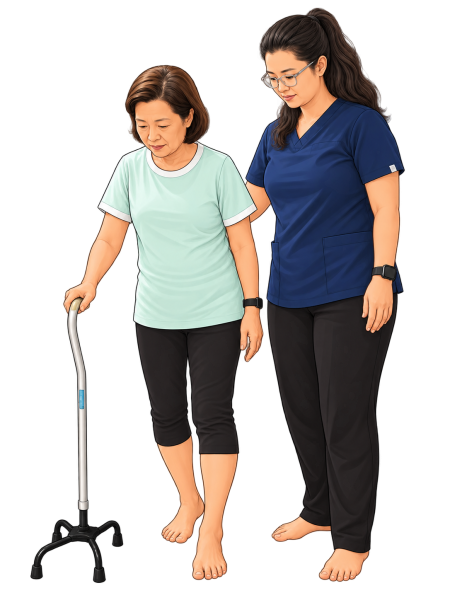
When someone experiences a stroke, life can change almost overnight. Movements that once felt automatic such as getting out of bed, standing up from a chair, walking around the house, getting dressed, or reaching for something, can suddenly become difficult.
For the person recovering from a stroke, this loss of independence can be frustrating and overwhelming. For family members and caregivers, watching someone who was previously independent become reliant on others can be equally challenging. There may be uncertainty about how much recovery is possible, how long it will take, and, most importantly, how best to support a loved one through the process.
This is where stroke rehabilitation plays an important role.
What is stroke rehabilitation really about?
When we think about stroke rehabilitation, we often think about helping someone regain movement in their affected arm or leg so that they can walk again. While improving strength and movement is certainly an important part of rehabilitation, stroke recovery involves much more than this.
The ultimate goal of rehabilitation is to help a person regain as much independence, confidence and ability to participate in everyday life as possible. This means looking beyond individual movements and considering how those movements come together during daily activities.
For example, physiotherapy may involve practising how to get in and out of bed, stand up from a chair, maintain balance while standing, walk around the home, climb stairs or reach for an object outside of the person’s immediate reach. These may seem like simple tasks to someone who has not experienced a stroke, but they can become significant challenges when strength, balance, coordination or proprioception have been affected.
It is also important to remember that the affected side does not have to be the dominant side for a stroke to have a major impact on daily life. We rely on both sides of our body for almost everything we do. Both legs contribute to standing and balance, while many everyday activities such as dressing, buttoning clothes, carrying objects and preparing a meal—require both hands to work together. Even when the non-dominant side is affected, these changes can create significant barriers to independence.
Another challenge that is often overlooked is fatigue. After a stroke, activities that once required very little conscious effort can suddenly require much more concentration and physical effort. A person may become tired much more quickly, and something as simple as getting out of bed or walking around the house may feel extremely demanding. This combination of reduced strength, balance, coordination, proprioception and increased fatigue can make everyday activities much more exhausting than they were before.
For this reason, stroke rehabilitation is not simply about making someone “stronger” or helping them “walk better”. It is about helping them relearn and adapt to the movements and activities that matter most to them.
How can physiotherapy help?
Physiotherapy plays an important role in stroke rehabilitation by addressing physical impairments while also helping patients work towards meaningful, functional goals.
At the beginning of rehabilitation, a physiotherapist will assess areas such as strength, balance, coordination, mobility and functional ability. However, rehabilitation should not stop at identifying what a person cannot do. It is equally important to understand what the person wants to be able to do again.
For one person, the goal may be to walk independently around the house. For another, it may be to go out for a meal with their family, carry their grandchildren, return to a favourite hobby or simply be able to get dressed without assistance. These goals help guide rehabilitation and allow the physiotherapist to design exercises that are meaningful and relevant to the person’s everyday life.
Sometimes, an activity that seems simple can be broken down into several smaller components. For example, getting out of a chair requires adequate strength, balance, coordination and control. Rather than expecting someone to immediately perform the entire movement independently, a physiotherapist can break it down into smaller steps and gradually build the person’s ability and confidence.

This process can sometimes feel repetitive, particularly when progress is slow. However, repetitive practice is an important part of helping the brain and body relearn movements and develop new strategies for performing tasks.
With stroke rehabilitation, it’s about celebrating every success, no matter how small it may seem. Being able to stand for a few seconds longer, take an extra step, transfer from a chair with less assistance or complete part of a dressing task independently may seem like small achievements. But these small improvements can be important milestones on the way towards greater independence.
Physiotherapy also extends beyond the treatment session itself. Family members and caregivers are often an important part of the rehabilitation process, particularly after a patient returns home. Caregivers may need guidance on how to assist with mobility, how to encourage practice safely and how to balance activity with adequate rest.
Finding the right balance is important. Doing too little may slow progress, while doing too much can leave a person excessively fatigued and unable to perform their exercises effectively. Providing caregivers with practical advice and explaining the purpose behind each exercise can help everyone feel more confident and involved in the recovery process.
The importance of early rehabilitation and continuing beyond it

You may have heard the term “golden period” used when talking about stroke recovery. The first few months after a stroke are often associated with faster and more noticeable improvements, particularly during the early stages of rehabilitation. This is an important period to make use of rehabilitation opportunities and practise meaningful movements and activities.
However, it is important not to think of the end of this period as the end of recovery.
Recovery after stroke is different for everyone. Improvements tend to be more significant in the early stages of recovery, although progress can continue for months after a stroke, albeit at a slower pace. As recovery progresses, improvements may become less obvious and may require more repetition, patience and consistency.
This is why rehabilitation should not simply stop because the first few months have passed. Continued practice of meaningful activities can help maintain function, build confidence and support further improvements. The focus of rehabilitation may also change over time, from regaining basic mobility to improving endurance, balance, independence and participation in everyday activities.
A caregiver's perspective: “Finding Her Way Back”
For families, stroke rehabilitation is a journey too.
One patient’s son shared his experience of watching his mother recover after her stroke. His story provides a glimpse into what stroke recovery can look like from the perspective of a caregiver.
“When my mum suffered a stroke, our lives changed almost overnight.”
The stroke left his mother with significant weakness on the left side of her body. At one point, she could not even lift her left hand. She was unable to walk, and everyday activities such as changing her clothes, moving around the house and taking care of her basic needs suddenly became difficult. For her family, seeing someone who had always been independent become so reliant on others was heartbreaking. There was also a great deal of uncertainty about how much mobility she would regain and whether she would ever be able to return to the life she had before her stroke.
Soon after her condition stabilised, she began physiotherapy with Kelly. From the beginning, the focus was on making the most of the early stages of recovery while recognising that meaningful progress would require patience, persistence and consistent practice. There were exercises that had to be repeated many times and movements that did not come naturally. There were also days when progress felt frustratingly slow. But with encouragement and guidance from her physiotherapist, she continued working towards her goals. Her family also played an important role. She increased the frequency of her physiotherapy sessions and continued practising her exercises at home. Gradually, the family began to notice small improvements.
“Gradually, we began to see small improvements and those small improvements gave all of us hope. Then those small steps became bigger ones.”
Over the following months, she steadily regained her strength and mobility. What had initially seemed almost unimaginable eventually became possible: she regained her mobility and returned to many of the activities she had previously taken for granted. For the family, the support provided by physiotherapy extended beyond the treatment sessions. After she was discharged from hospital, Kelly visited their home and provided advice on simple changes that could help her move around more safely and confidently. She also continued to check in even after formal physiotherapy had been completed. For caregivers, this kind of support can make a significant difference. A stroke affects more than the individual, it can change the routines, responsibilities and emotions of the entire family. Caregivers may find themselves wondering whether they are doing enough or whether they are supporting their loved one in the right way.
Having a physiotherapist who can provide practical advice, reassurance and guidance can help caregivers feel more confident throughout this process.
Looking back on his mother’s recovery, her son shared:
“Stroke rehabilitation is not simply about helping someone walk again. It is about helping a person reclaim their independence, their confidence and, ultimately, their life.”
Recovery is a journey, not a single milestone
Every stroke recovery journey is different. The extent and speed of recovery can depend on many factors, including the location and severity of the stroke, the person’s overall health, the impairments they experience and their ability to participate in rehabilitation.
Progress may not always be obvious. Sometimes, recovery looks like walking independently for the first time. Other times, it may simply be being able to stand a little longer, take a few more steps, put on a piece of clothing independently or feel more confident moving around the home. These moments matter.
Stroke rehabilitation is about more than restoring movement. It is about helping people regain the confidence and skills they need to participate in the activities that give their lives meaning. It is also about supporting families and caregivers so that they feel equipped to be part of that journey. As this patient’s story shows, recovery may begin with very small steps. With appropriate rehabilitation, consistent practice, encouragement and determination, those small steps can gradually become bigger ones.
“Today, when I see my mum walking around independently and going about her daily life again, I am reminded of just how far she has come.”
For anyone recovering from a stroke, or caring for someone who is, it is important not to underestimate the value of rehabilitation and not to become discouraged when progress feels slow. Celebrate the small wins, keep practising, and remember that every person’s recovery journey is different.
